

A delivery date slips. The executive readout gets rewritten three times. An engineering manager avoids a difficult performance conversation, and the director steps in to handle it.
Then someone says, “We should get the leadership team into training.”
I understand the reflex. I have worked inside large organizations where a leadership workshop felt like the most practical next move. It was visible, budgetable, and easier to approve than a deeper look at how the work was actually set up.
But leadership team performance problems do not all come from a lack of knowledge.
Before you buy another program, identify the real problem by sorting the problem into three buckets: skill, will, and environment.
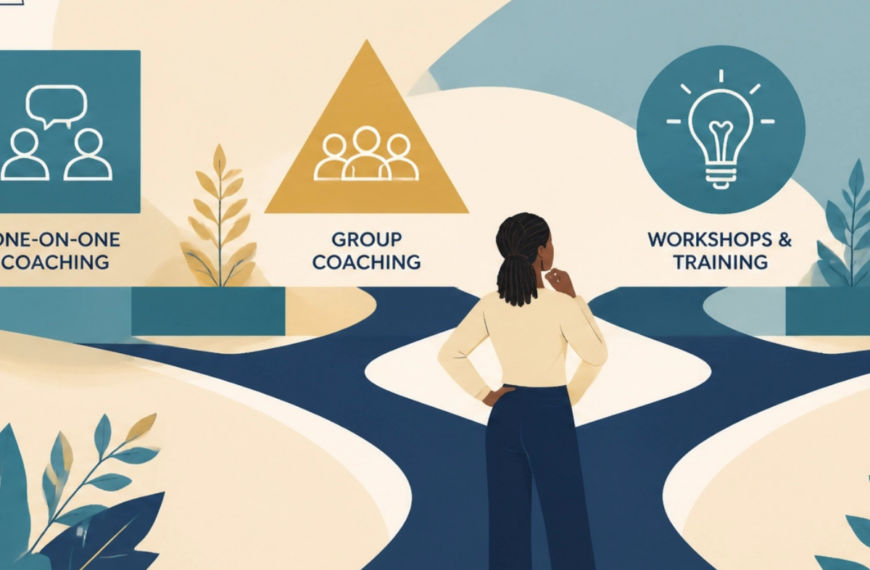
Training can help with skill. It has limited reach when the real issue is motivation, confidence, fear, workload, incentives, or a broken operating model.
If you diagnose the wrong bucket, you can spend money, consume calendar space, and leave the original problem sitting right where you found it.
Start by separating skill from will and environment
When a technology team misses commitments, leaders often describe the issue with broad language:
“Communication needs work.”
“They need to be more strategic.”
“We need stronger accountability.”
Those statements may be accurate, but they are not diagnoses. They are labels.
A useful diagnosis asks a more direct question:
What is preventing this leader or team from doing the expected work?
When the answer is “They do not know how,” you are likely dealing with a skill problem.
You may be looking at a will problem when they know what to do but are avoiding it, resisting it, or protecting themselves.
An environment problem is usually in play when the system makes the expected behavior difficult or impossible.
These categories can overlap. You might be looking at a manager who lacks confidence because nobody ever taught her how to lead an executive readout, while the organization keeps changing the message she is supposed to deliver. Start with the strongest driver.
I have seen leaders use training as a holding pattern. The organization knows something is wrong, but nobody has isolated the cause. So people attend a session and return to the same priorities, approval chains, and workload.
That is one reason I recommend reading 10 Reasons Your Team’s Performance is Stagnant. Training has to connect to the daily performance system or it will have very little room to stick.
Leadership team performance improves when the skill gap is specific
A skill problem means the person or team does not know how to perform the required behavior reliably.
In a technology organization, that may show up as an engineering manager who cannot prioritize work when product, security, and executive requests compete. It may look like a product leader who gives a status update full of activity but leaves the executive team unclear about risk, tradeoffs, and decisions needed. Or it could show up when an IT manager struggles to run a useful one-on-one, so small performance issues become larger delivery problems. It can also show up when a leadership team understands its goals but has no shared process for making decisions when the roadmap changes.
These are teachable gaps. A manager may need a practical process, better tools, rehearsal, feedback, or repeated application in real work.
The key word is specific.
“Improve communication” is too broad to guide an intervention. “Give a three-minute executive readout that names the outcome, current risk, decision required, and owner” gives you something observable.
Before buying training, ask what the leader should be doing that is not happening now. Ask whether the leader understands the expected behavior, has had a chance to practice it, has the authority and time to apply it, and whether the director can observe the behavior in actual work.
If the person says, “I have never been shown how to do that,” training or coaching may be appropriate. If the person can explain the process clearly and has demonstrated the skill before, keep investigating. The problem may sit in the will or environment bucket.
A will problem requires a different leadership response
Will is a loaded word. Directors sometimes hear it as a judgment about character. That makes the issue harder to address.
In this context, will includes motivation, confidence, fear, buy-in, trust, and the perceived consequences of taking action.
One manager may know how to delegate but keep every technical decision because a previous delegation went badly and the manager was blamed. You may also have a leader who understands the need for candid feedback but avoids it because the team has learned that difficult conversations create conflict without changing anything. In other cases, a manager resists a new operating model because it conflicts with the values that made that person successful in the old one.
A workshop on delegation may give that first manager a useful framework. It will not answer the more important question: What happened when this person tried to delegate before?
Addressing a will issue
You can spot a will issue by looking for a gap between knowledge and behavior.
The manager can describe what should happen and may even agree with the expectation. Yet the behavior disappears when the pressure rises.
That pattern deserves a conversation before a course enrollment.
Try this script:
“You understand the expectation, and I have seen you use this skill in other situations. Something is getting in the way here. What feels risky about doing it this way?”
Then listen for the actual barrier.
Is the manager afraid of losing technical credibility? Does the manager expect punishment for making a call? Is there a values mismatch with the direction the organization is taking? Has the manager lost confidence after a reorganization or missed delivery date?
Those questions may lead to coaching, clearer consequences, decision rights, or a direct performance conversation. A training room cannot carry all of that work.
If a director wants a manager to examine personal performance patterns before a deeper conversation, the Find My Leadership Gaps quiz can be passed along as a starting point. Use it as a prompt, not as a substitute for observation and honest feedback.
Environment problems will overpower good training
Environment problems are often the easiest to miss because the organization describes them as individual performance issues.
A team is asked to shorten delivery timelines while adding approval steps. Managers are told to develop their people while carrying an impossible number of direct reports and critical project responsibilities. Product, engineering, security, and sales each receive different definitions of priority. Leaders are measured on local output while executives expect cross-functional results.
Then the organization sends managers to training on prioritization.
That workshop may be well designed. The work will still slow down if every priority is treated as urgent and no one has authority to make tradeoffs.
A workshop cannot solve a workload problem.
It will not repair a process that requires five approvals for a decision one leader should be able to make. A training course also will not remove a project that executives stopped discussing but never formally closed. Nor will it reconcile incentives that reward individual team output while punishing leaders for making capacity tradeoffs across the organization.
Look for environmental clues.
Multiple leaders describe the same obstacle. Performance drops after a reorganization, tool change, or priority shift. The expected behavior conflicts with what senior leaders reward. Managers spend their time responding to escalations instead of leading their teams. The same issue returns after different people attend different training programs. This is where leaders need to stop blaming individuals and inspect the setup.
I once worked with a team who was struggling to get their work done. The director blamed the will to do the job. In reality, the team was getting so many things thrown at them that they weren’t sure of the priorities. I gave them language to ask without it looking like push back.
When you see the same problem across several managers, hold off on calling it a capability issue. Five people rarely develop the same weakness at the same time. Look at how the work is set up: who owns which decisions, how much of the week disappears into meetings, whether the team is staffed for what’s been promised, what the metrics reward, and whether your executives are all asking for the same thing.
Harvard Division of Continuing Education also provides a broader overview of improving leadership skills, which can help organizations define the capabilities leaders need. That definition still has to be grounded in your actual operating environment.
Run a quick diagnosis before you approve the budget
Before you approve a leadership training proposal, choose one team and examine a recent performance issue. Keep the conversation grounded in an actual delivery date, executive readout, reorganization, or missed commitment.
Ask these questions:
- What behavior or result are we trying to change?
- Does the leader know how to produce the expected result?
- Has the leader shown the capability in another setting?
- What might make the behavior feel risky or pointless?
- What in the current structure, workload, process, authority, or incentives makes the behavior difficult?
Write down the evidence, not the interpretation.
“Manager is not strategic” is an interpretation. “Manager brings three solution options, but the director rejects each one and takes the decision back” is evidence.
“Team lacks accountability” is an interpretation. “Two managers own the same approval, while neither owns the final delivery date” is evidence.
That distinction matters because your response should match the problem:
For a skill gap, build practice into the work. For a will gap, have the direct conversation and set clearer expectations. When the environment is the constraint, change how the work is designed.
You may find all three in the same situation. Start with the constraint that is doing the most damage.
If you are seeing recurring leadership team performance issues across roles, functions, or reorganizations, a broader diagnostic can help you stop guessing. My Leadership Performance Diagnostic is designed to pinpoint where performance is getting stuck and what to address first.
Before you buy another workshop, make sure you know which problem you are paying to solve.