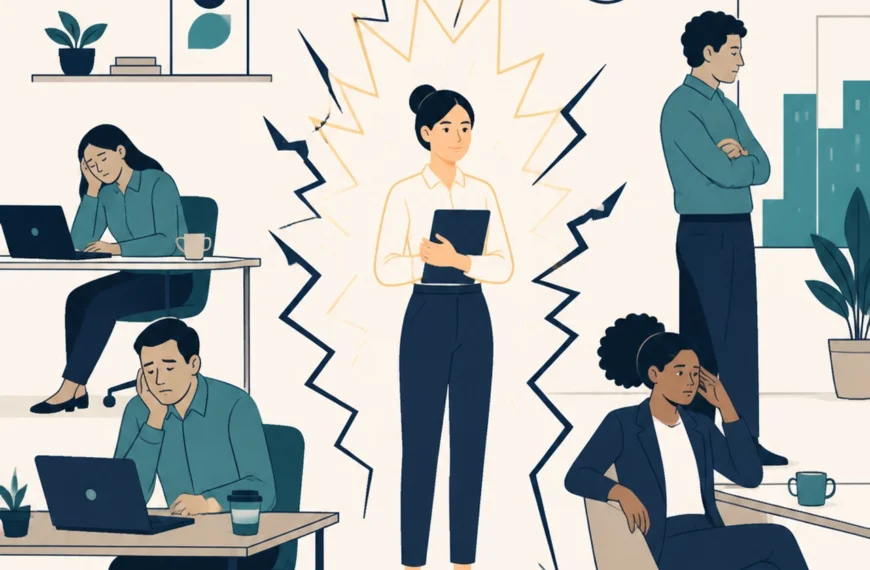

You know that feeling when you’ve made so many decisions in one day that your brain taps out like, “Nope. I’m done. It’ll have to wait ‘til tomorrow or they’ll figure it out themselves”?
Yeah…that’s decision fatigue. And if you’re a leader, you’re probably living in it like it’s your second home.
Let’s call it what it is:
Decision fatigue is quietly wrecking your leadership effectiveness, your confidence, your time, and your energy — all while pretending to be “normal.”
What you’re calling “being thoughtful” or “being responsible” or “making sure you consider every angle”… is often just overthinking with a blazer on.
Let’s dig into why this is happening, what it’s costing you, and how to reclaim your leadership edge before decision fatigue eats the rest of it.
You Are a Human Leader, Not a Decision-Making Robot
Somewhere along the road to leadership, many people pick up the false belief that being the leader means you should be making all the choices.
- You weigh all the options.
- You see all the risks.
- You answer all the questions.
- You fix all the details.
- You approve all the steps.
- You clarify all the expectations.
- You solve every problem before it explodes.
And quite frankly, you’re tired right?
Not “I need a nap” tired.
I’m talking about decision-making exhaustion that hits you so hard your brain feels like a browser with 137 tabs open, and Spotify still playing in the background.
Leaders aren’t short on intelligence.
Leaders are short on mental margin.
And when your margin disappears, your decision-making suffers.
The Silent Threat: Decision Fatigue
Decision fatigue is what happens when the volume of decisions you make outpaces the mental energy you have to make them.
And it sneaks in quietly.
At first, it looks like…
- Taking too long to make a simple decision
- Being easily irritated when someone asks you a question
- Avoiding choices that aren’t even that serious
- Second-guessing your first answer
- Changing your mind too quickly
- Feeling foggy or indecisive
- Needing more and more “input” before you choose
Then suddenly you’re in a full-blown spiral, where:
- Emails stay in draft.
- Opportunities pass you by.
- Your team is waiting.
- Projects stall.
- You keep asking for “one more data point.”
- You’ve rethought the same decision twelve different ways.
And let’s not forget the classic:
You’re too tired to decide what to eat for dinner even though you spent all day making decisions that impact millions of dollars and thousands of lives.
Decision fatigue doesn’t discriminate.
It hits everyone, especially high-achieving leaders who are trying to hold everything together.
Why Leaders Are More Prone to Decision Fatigue Than Everyone Else
You’re overloaded. That’s the gist of it.
But here’s why this hits high-achieving leaders the hardest:
1. You’re making decisions at multiple levels.
Leaders toggle between:
- tactical decisions (“What should I prioritize today?”)
- operational decisions (“What’s the best solution for this issue?”)
- strategic decisions (“What direction are we going?”)
- people decisions (“How do I support this person?”)
- emotional decisions (“Is this worth pushing back on?”)
That’s a lot.
Leadership isn’t “hard” because of the work, it’s hard because of the weight of the decisions.
2. Everything feels high stakes.
Many leaders are terrified to choose “wrong.”
So they stall.
They analyze.
They ask more people.
They seek clarity on risks no one can predict.
Fear masquerades as responsibility.
And it drains you.
3. Constant context switching.
Switching from meeting to meeting, task to task, priority to priority, person to person is like running mental marathons all day.
Your brain gets tired of flexing.
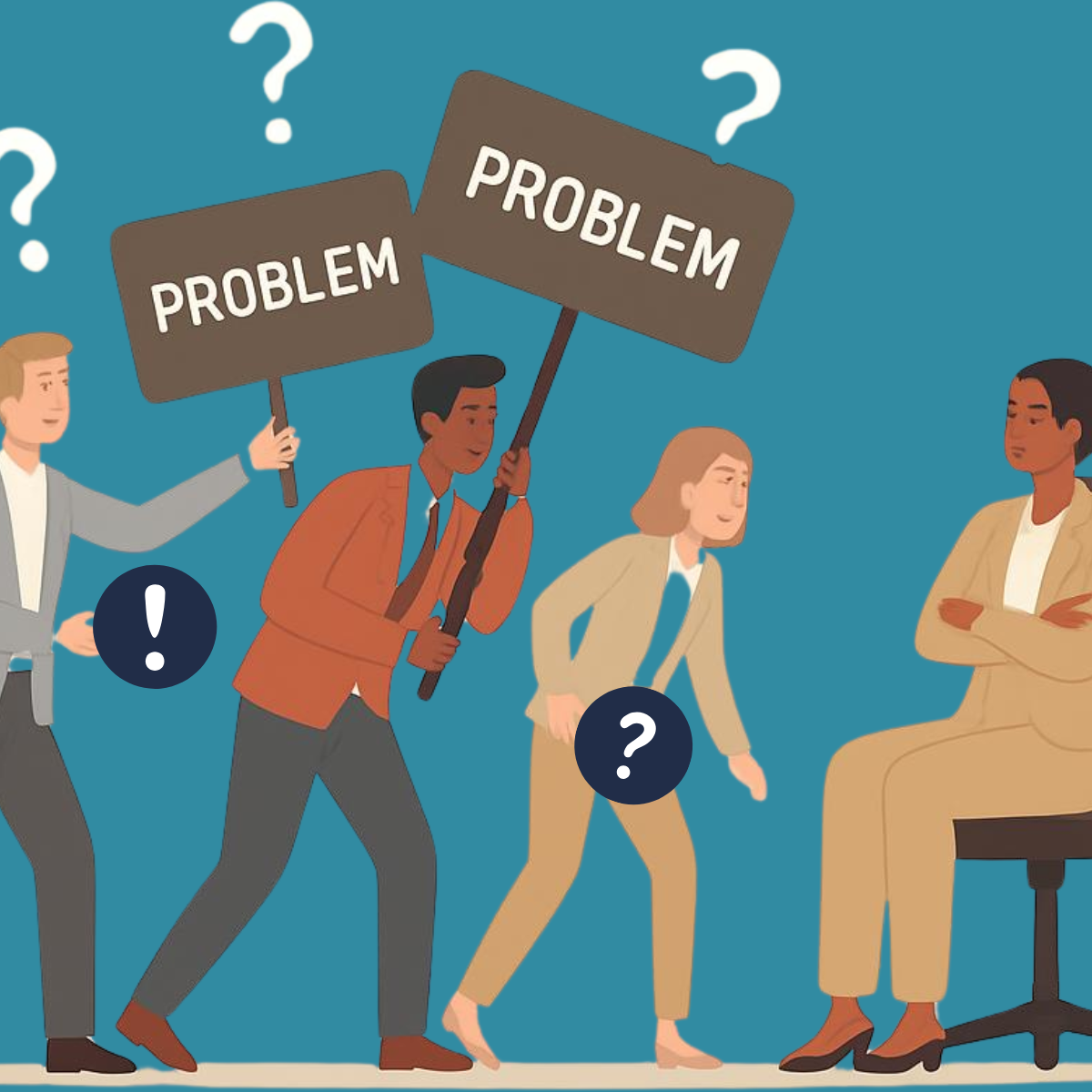
4. You’ve become the team’s default answer key.
If your team relies on you for every decision, every approval, every clarification… guess what?
You’re carrying the cognitive load of multiple people.
That’s not leadership.
That’s intellectual babysitting.
5. You don’t have a decision-making system, so you wing it.
Most leaders weren’t taught how to make decisions.
They were just told, “You’re the leader now. Choose.”
Without a structure, every decision feels like reinventing the wheel.
And your mind pays the price.
How Decision Fatigue Shows Up (Even When You Think You’re Just Busy)
Decision fatigue rarely announces itself. It doesn’t come waving a sign.
It shows up in sneaky little ways, and leaders often mislabel it as:
- procrastination
- low motivation
- needing more time
- needing more information
- analysis
- thoroughness
- caution
- “I just need to think it through more”
- perfectionism
- being overwhelmed
But underneath all of that?
You’re mentally tapped out.
A few tell-tale signs:
→You keep re-reading the same email.
It’s not that you’re unclear, your brain is just tired.
→You delay decisions that used to be easy.
Like approving a PDF or saying yes/no to a meeting.
→You overthink quick choices.
Suddenly a simple decision requires a full investigative report.
→You make impulse decisions out of frustration.
Because your brain is like “MAKE IT STOP.”
→You feel foggy or mentally slow.
Not because you lack clarity — you lack capacity.
→Your team is stuck waiting on you.
You’re the bottleneck, and your mind is dragging.
Decision fatigue turns sharp leaders into hesitant ones — and hesitant leaders into overwhelmed ones.
The Cost of Decision Fatigue on Your Leadership
Let’s get brutally honest about what this is costing you.
Because it’s not just “being tired.”
Decision fatigue directly impacts:
- Your confidence
When you second-guess yourself constantly, your confidence takes the hit.
And once confidence cracks, hesitation multiplies.
- Your credibility
Slow decisions look like avoidance.
Quick emotional decisions look reckless.
Neither builds trust.
- Your team’s performance
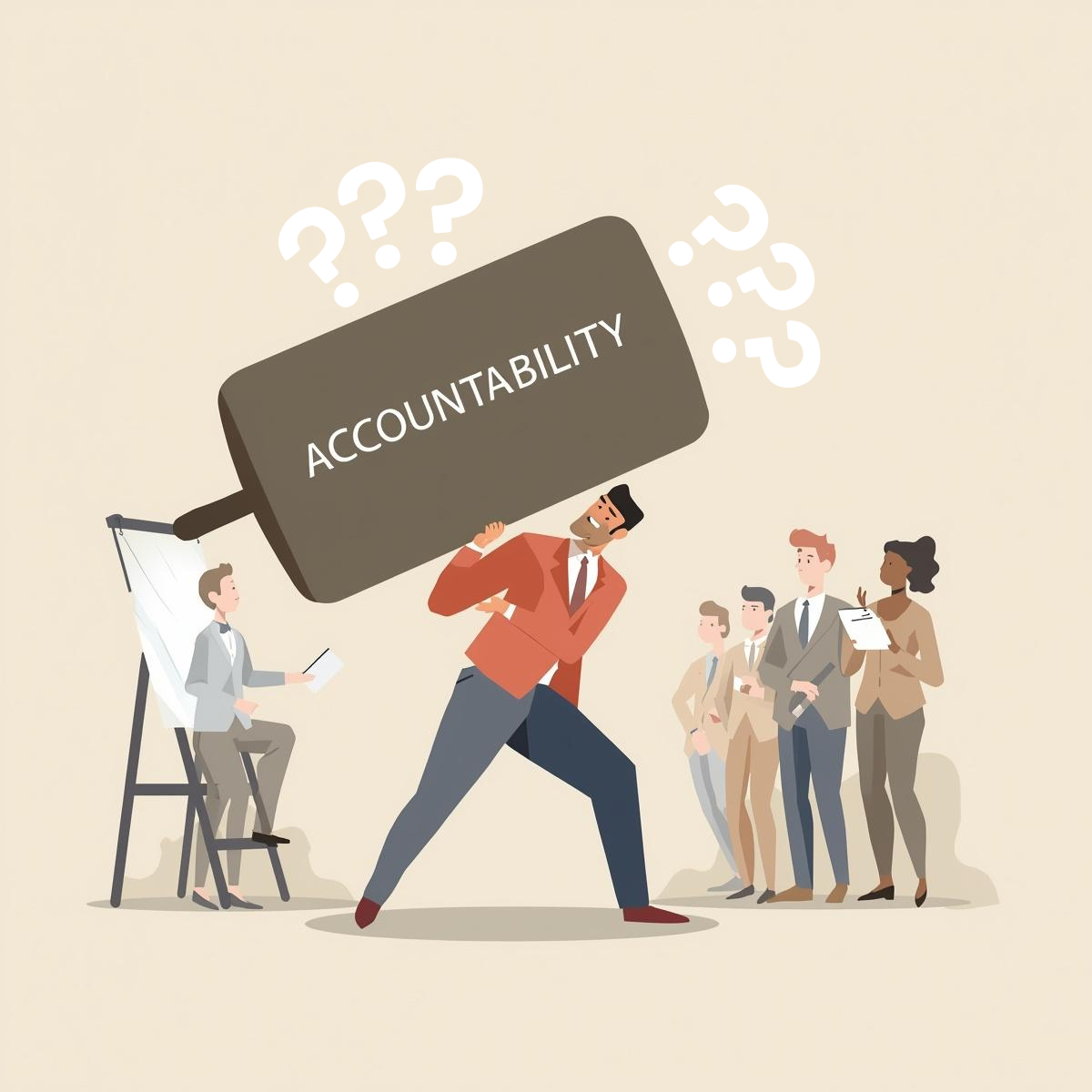
If everything funnels through you, your team can’t move.
They wait.
They stall.
They lose momentum.
Your bandwidth becomes their limitation.
- Your strategic voice
A fatigued brain cannot think big.
It can barely think “right now.”
Decision fatigue keeps you in tactical mode.
No leader is influential from tactical mode.
- Your energy and well-being
Let’s not ignore this.
Overthinking drains emotional energy faster than actual work.
This is why leaders who overthink often feel tired even on light workload days.
- Your career advancement
Organizations elevate leaders who:
- decide quickly
- stay consistent
- think strategically
- take smart risks
- move initiatives forward
Decision fatigue kills that momentum.
You can’t lead boldly when your brain is running on fumes.
Here’s the Good News: Decision Fatigue Is Fixable
Decision fatigue is not a character flaw.
It’s not a lack of intelligence.
Or evidence that you’re failing.
It’s also not a permanent blemish.
Simply put, it’s your brain saying, “Hey, I need a system to disposition these things.”
Great decisions don’t come from strength.
They come from structure.
Let’s rebuild yours.
How to Reclaim Your Leadership Edge (Without Burning More Brain Cells)
Below are strategies that work for high-achieving leaders who are juggling fast-paced environments, back-to-back meetings, and teams that rely heavily on them.
Use the ones that resonate — and don’t be afraid to put your own spin on them.
1. Reduce Your Decision Load (Before It Reduces You)
This is not about being lazy.
This is about preserving your capacity for decisions that actually matter.
A. Automate the predictable decisions.
Think routines, templates, default settings, and recurring tasks.
Example:
-
-
- Standard email responses
- Standard onboarding steps
- Standard weekly check-ins
- Standard reporting formats
-
Every “automated” decision saves mental bandwidth.
B. Eliminate decisions that don’t need your involvement.
If someone else can decide — let them.
Give guidance, not ownership.
C. Move routine decisions to the same time every day/week.
Decision batching is a game changer.
Your brain adjusts faster when decisions are grouped.
2. Create a “Decision Filter”
Every decision doesn’t deserve equal attention.
A simple filter can help you categorize decisions into three groups:
Quick Decisions (30 seconds or less)
These are low impact and low risk.
Just decide.
Trust yourself.
(You can get the free Quick Guide to Stop Overthinking and Make Decisions Confidently, which includes an interactive decision tree here.)
Considered Decisions (5–10 minutes)
These require brief thought, not obsession.
Give yourself a set time.
Choose within it.
Strategic Decisions (scheduled time)
These deserve actual brainpower
— not leftover scraps at the end of the day.
This filter alone will cut your decision fatigue in half.
3. Stop Over-Calculating “Worst Case Scenarios”
Many leaders exhaust themselves running catastrophe simulations.
- “What if this fails?”
- “What if they get upset?”
- “What if it reflects poorly on me?”
- “What if I’m missing something?”
Fear steals more energy than the decision itself.
Instead, ask: “What’s the worst that realistically happens… and can I handle it?”
Most of the time, the answer is: “Yes, actually. I’d be fine.”
That’s your permission slip to move.
4. Make “Done” Your Default
Here’s a wild truth:
Indecision takes more time than a wrong decision.
A wrong decision gives you data.
Indecision gives you nothing but stress.
Leadership rewards movement.
Not mental marinating.
5. Limit Your Daily Decision Windows
Your sharpest thinking is early in the day — use it wisely.
Decisions that matter?
Make them before lunch.
Decisions that drain?
Avoid making them at the end of the day.
Your future self will thank you.
6. Implement the “Two-Option Rule”
If you’re stuck, narrow the choice:
“What are the top two options?”
Your brain moves faster when the menu shrinks.
7. Build a Decision-Making Ritual
A simple ritual increases clarity dramatically:
- Take 60 seconds to breathe
- Identify the purpose of the decision
- Identify the risk level
- Identify what success looks like
- Choose based on alignment, not fear
You don’t need a 27 pros and cons list.
You need alignment.
8. Close Open Loops Daily
Every unfinished decision lingers in your brain.
And lingering decisions are mental parasites.
Spend 15 minutes at the end of each day closing as many loops as you can:
- Decide
- Delegate
- Delay with intention
- Delete
Your overnight mental peace will skyrocket.
9. Use a Visual Decision Tree (Yes, This Matters)
You already created one, use it in real life.
Visual tools offload cognitive load.
They help you:
- categorize choices
- prioritize faster
- identify patterns
- avoid spiraling
- build decision-making muscle
Leaders perform better when their process is visible.
The Mindset Shift That Changes Everything
Decision fatigue is not solved by becoming “better at decisions.”
It’s solved by making:
Fewer decisions.
Decisions earlier.
Decisions with structure.
Decisions without fear.
But the biggest shift?
Understanding that leadership is not about making every decision, it’s about ensuring the right decisions get made.
Sometimes that’s you.
Sometimes that’s your team.
Sometimes that’s your systems.
Healthy leadership is not about holding it all.
It’s about distributing it wisely.
What Happens When Leaders Reduce Decision Fatigue
Once you implement these strategies, here’s what changes:
You become more decisive. Because you’re no longer mentally overloaded.
Your confidence increases. Because consistent decisions build self-trust.
Your team becomes more self-sufficient. Because you’re finally giving them room to own things.
Your strategic thinking improves. Because you’re not stuck in tactical noise.
Your emotional bandwidth increases. Because you’re not constantly running mental marathons.
Your presence becomes sharper. Because you’re operating from clarity, not exhaustion.
Decision fatigue dims leaders.
Structure lifts them.
You’re Not Overthinking, You’re Overcapacity
Shaming yourself for feeling indecisive helps no one.
You’re not “bad at deciding.”
You’ve simply been making too many decisions with too little support and too much pressure.
In 2026, you need:
- better systems
- clearer boundaries
- stronger delegation
- fewer decisions
- more margin
Decision fatigue is not your permanent state.
It’s your warning sign.
And restoring your leadership edge isn’t about becoming a machine, it’s about giving your mind space to lead again.
Because when your mental capacity returns?
Your clarity returns.
Your confidence returns.
Your influence returns.
And your leadership becomes powerful again.