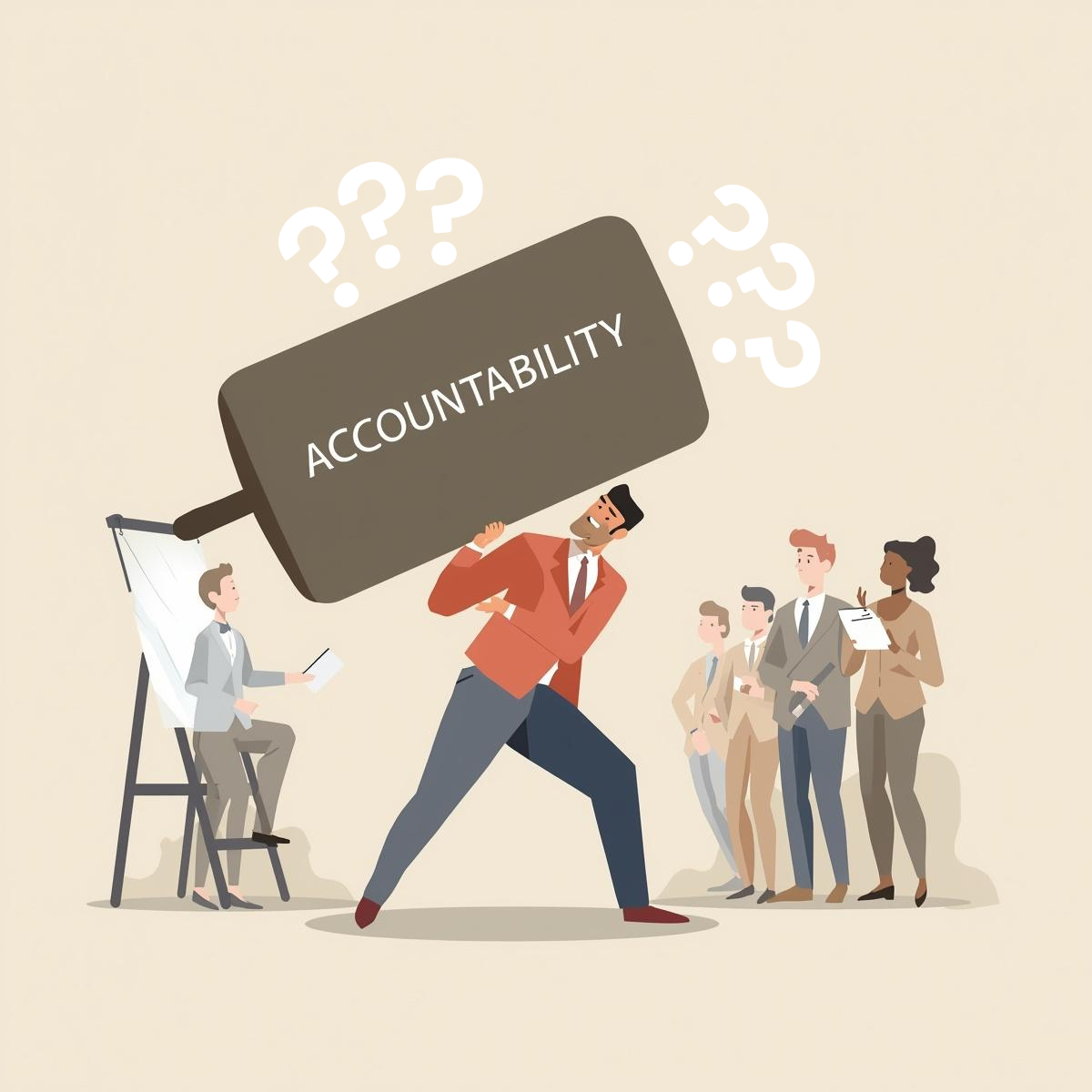
Most leaders don’t have an accountability problem. They have a design problem.
Accountability fails when leaders rely on reminders and pressure instead of building clarity into the way work actually gets done. And when that approach doesn’t work, they do what most frustrated leaders do: push harder, repeat themselves more, and start over-functioning.
Let’s fix the real issue.
What accountability actually means (and what it doesn’t)
Accountability is ownership of outcomes.
An accountable person understands how their action, or inaction, connects to a result, and they accept ownership of that result.
Where leaders get tripped up is confusing accountability with responsibility.
- Responsibility is task-focused: “Do the thing.”
- Accountability is outcome-focused: “Own the result.”
You can be responsible for completing a task and still not be accountable for the final outcome. And you can be accountable for an outcome while delegating parts of the work.
That distinction is the difference between a team that executes and a team that constantly needs babysitting.
The myth: Pressure + motivation = accountability
A lot of leaders operate from this assumption:
If I apply enough pressure and they’re motivated enough, they’ll be accountable.
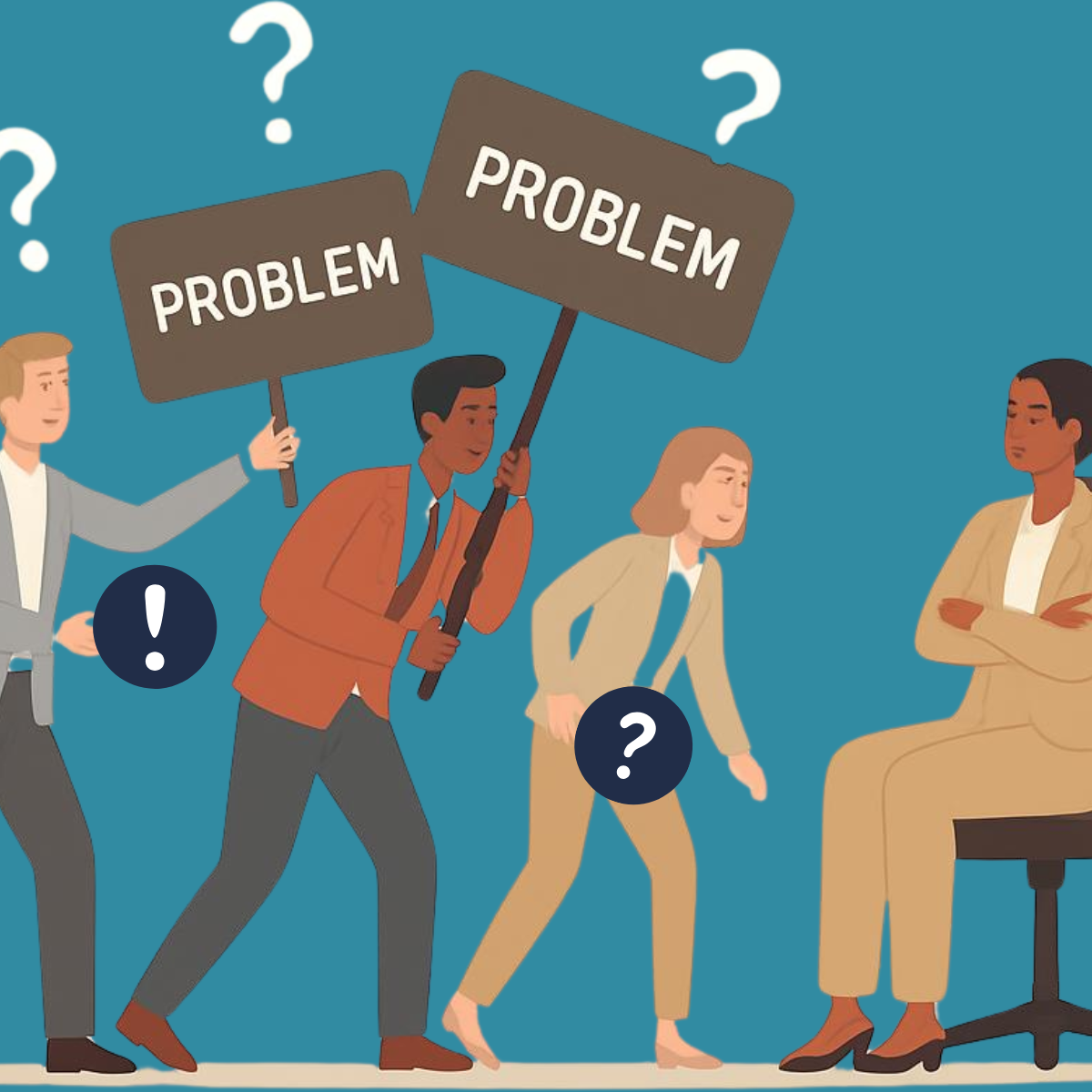
That sounds reasonable… until you’ve led real people. Pressure doesn’t create ownership. It creates compliance—sometimes. Resentment—often. And avoidance—more than leaders want to admit.
And motivation doesn’t automatically create accountability either. Someone can be highly motivated and still avoid ownership if expectations are unclear, priorities shift constantly, or consequences are inconsistent.
When leaders believe accountability can be pressured into existence, performance dips fast:
- work slips
- results are inconsistent
- frustration grows
- morale tanks
- leaders start doing the work “just to make sure it gets done”
That’s not leadership — and being the office police is going to keep you exhausted.
What actually causes accountability breakdown
Accountability breaks down when leaders don’t design it into the workflow.
They assign work and assume the:
- goal is obvious
- standard is understood
- timeline is implied
- process is “common sense”
- team will deliver excellence without structure
Then when the outcome misses the mark, the team gets labeled “not accountable”, “lazy”, or worse.
The truth is simpler:
If the path to success is unclear, accountability becomes optional.
The clarity gap: “I’ve been very clear…”
This is where leaders say:
“I’ve been very clear.”
“I’ve said it over and over.”
“I don’t know why they aren’t getting it.”
And my response is always the same: Clear to who?
One person’s “clear” is another person’s “I’m confused and I don’t want to ask again.”
(And yes—this is the same dynamic you see when parents give their kids “simple instructions.”)
Often leaders think they’ve been clear when what they’ve actually done is repeat the same expectation louder, with more emotion.
Expectations vs assumptions
If you’ve heard the phrase, “When you assume, you make an ass out of you and me,” congratulations—you’re probably doing that with your team.
Leaders assume people know:
- what “good” looks like
- which things matter most
- what success includes
- the true timeline
- what happens if it’s missed
But assumptions are based on what you believe someone knows, and those assumptions are often wrong.
Expectations are different.
Expectations are the firm identification and clear communication of the outcome you want.
The 5-minute clarity method: WHO, WHAT, WHEN, WHERE, WHY
If you want real accountability, define the expectation so it can be executed:
WHO owns WHAT by WHEN, WHERE it gets delivered, and WHY it matters.
Example:
Kendal (WHO)—you’re accountable for submitting the Northwest region supplier performance scorecards (WHAT) to the Supplier Performance SharePoint (WHERE) no later than the 10th of every month (WHEN).
These scorecards are used by the VP in supplier performance reviews and contract negotiations. When the scorecards aren’t available and accurate, it puts us at financial risk and impacts customer delivery (WHY).
That’s one paragraph. No confusion, no excuses.
Two important notes:
1) I didn’t include the “how.”
That’s intentional. Leaders, especially newly promoted leaders or leaders close to the work, often try to control the process instead of the outcome. In most cases, the how isn’t as important as the result.
If the how is critical for safety, compliance, security, or financial controls, then document it. Otherwise, let professionals own the method.
2) Kendal can be accountable without personally doing every task.
Accountability doesn’t mean “you do it all.” It means “you own the result,” even if you delegate the work.
The follow-through gap: clarity without consistency
Clarity is necessary—but it’s not enough.
Clarity without follow-through creates optional accountability.
Follow-through means you stay consistent with the:
- standard
- timeline
- delivery method
- check-in rhythm
- consequences (when needed)
If the expectation is “submit to SharePoint by the 10th,” but you accept an email on the 12th “just this once,” you’ve taught your system that deadlines are flexible.
Sometimes flexibility makes sense. But it should be a decision, not a habit.
Follow-through also means checking whether the system is working. If you’re seeing constant misses, the answer isn’t always “push harder.”
Sometimes the answer is: fix the design.
Accountability System Checklist (Use This with Your Team)
Here’s how to know if your accountability system is actually set up to succeed:
✅ Accountability System Checklist
- Outcome is defined: What does “done” look like?
- Ownership is clear: Who is accountable vs responsible?
- Delivery is specific: Where does the work live (tool/location)?
- Timeline is explicit: When is it due + what’s the cadence?
- Visibility exists: How will progress be tracked?
- Follow-through is built in: What happens if it’s missed?
- Decision rights are clear: Who can decide, approve, escalate?
- The system is reviewed: Are misses a people issue or a process issue?
Designing accountability systems (not chasing them)
Accountability isn’t something you hope for. It’s something you build.
1) Map ownership with a RACI
A RACI matrix clarifies roles in a workflow:
- Responsible (does the work)
- Accountable (owns the result)
- Consulted (gives input)
- Informed (kept in the loop)
When teams don’t know who owns what, accountability turns into finger-pointing and confusion.
2) Add structure before you add consequences
- Identify the real problem (missed deadlines? unclear quality? shifting priorities?)
- Define the desired outcome
- Use WHO/WHAT/WHEN/WHERE/WHY
- Build follow-through into the workflow (visibility + checkpoints)
3) Build a communication structure that supports the system
Fewer “drive-by assignments.” More consistency:
- where work is assigned
- where updates live
- how risks are escalated
- how priorities change (and who decides)
Because when communication is messy, accountability becomes guesswork.
The real fix
If you’re tired of repeating yourself, it’s not because your team is incapable. It’s because your system is unclear. Accountability becomes real when expectations are executable and follow-through is consistent. That’s when ownership is possible—without you becoming the human reminder app.
If you’re ready to stop chasing accountability and start designing it, book a Leadership Clarity Session. We’ll map your expectations, ownership, and follow-through into a system that’s clear, measurable, and built to last — without the micromanaging or the burnout.